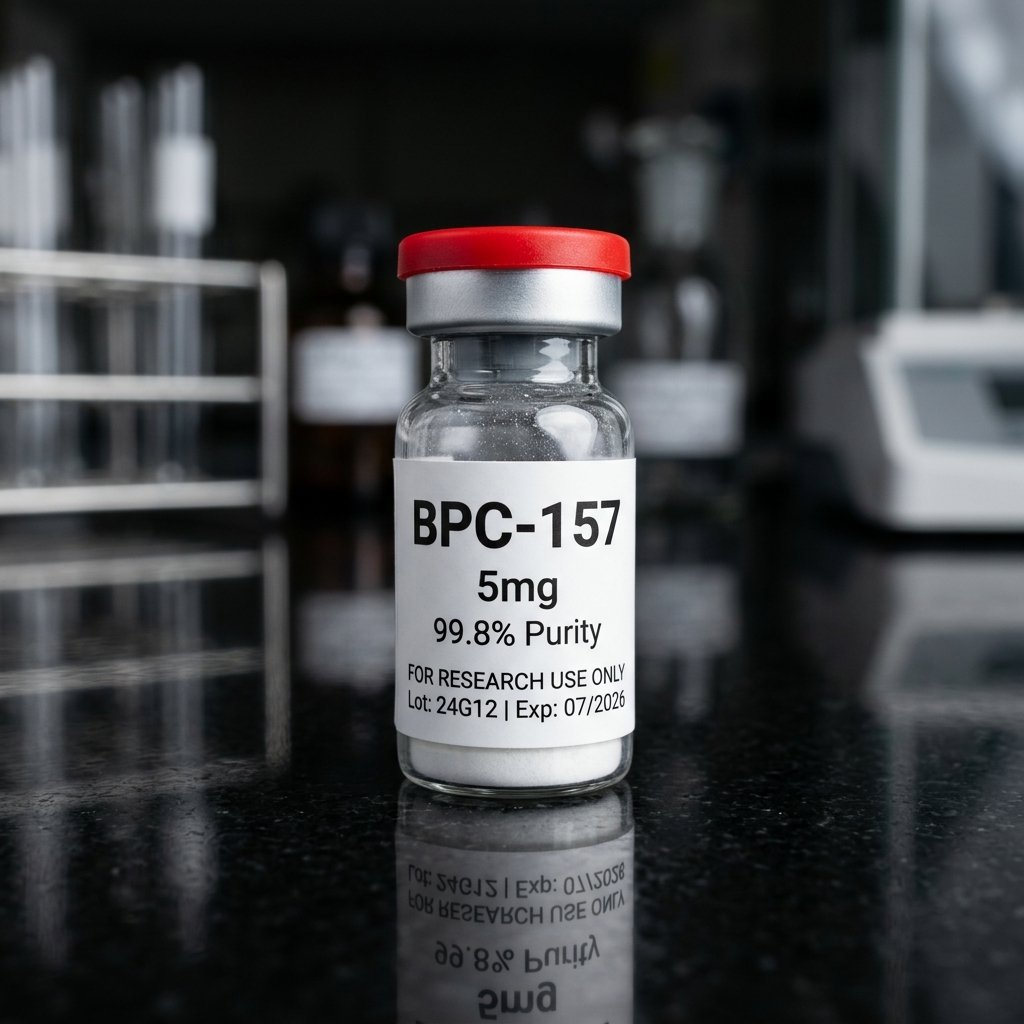
"Research use only" appears on nearly every research chemical product page, but its actual legal meaning is often misunderstood. This article breaks down what the designation signals under UK regulatory frameworks, what obligations it places on both suppliers and purchasers, and what it does not mean.
What RUO labeling signals
Research-use-only labeling signals that a product is not licensed or authorised as a medicine under the Human Medicines Regulations 2012, has not been evaluated for human administration, and is intended solely for laboratory or in-vitro research applications. It is a statement of intended use and regulatory status, not a safety rating.
The role of the MHRA
The Medicines and Healthcare products Regulatory Agency (MHRA) is the UK's medicines regulator. It oversees marketing authorisations for medicines, polices unlicensed medical claims, and takes enforcement action against products supplied for human use without authorisation. The MHRA does not "approve" or certify research chemicals, because its remit is medicines specifically. Research peptides are labelled and sold for laboratory research precisely because they sit outside that medicines framework, not because they have passed through it.
Purchaser responsibilities under the RUO framework
Buyers are generally expected to confirm a legitimate research purpose, confirm they meet any applicable age requirements, and refrain from representing a purchase as being for human consumption. Suppliers rely on this attestation as part of maintaining the research-use-only positioning across a transaction.
What RUO does not mean
RUO labeling does not mean a compound is illegal to buy, sell, or possess in the UK — many research-use-only compounds are lawful for legitimate laboratory purposes. It also does not mean the safety, efficacy, or any health-related claim about the compound has been evaluated or authorised, because no such claim is being made under this framework in the first place.
It is also worth being precise about what the label itself can and can't do. Under the Human Medicines Regulations 2012, whether a product counts as an unlicensed medicine turns on its actual intent and presentation, not solely on the wording printed on the packaging. A product marketed, described, or implied to be for human use is not shielded from medicines regulation simply because it also carries a "not for human consumption" or "research use only" statement. The label reflects the supplier's stated position; it does not override how a product is actually presented or marketed.
How this shapes supplier obligations
A supplier operating correctly within the RUO framework avoids therapeutic or medical claims, does not provide dosing instructions intended for human use, labels products clearly, and maintains a documentation trail such as batch-specific Certificates of Analysis. These practices are what keep a research chemical business correctly positioned as a laboratory supplier rather than an unlicensed medicines seller.