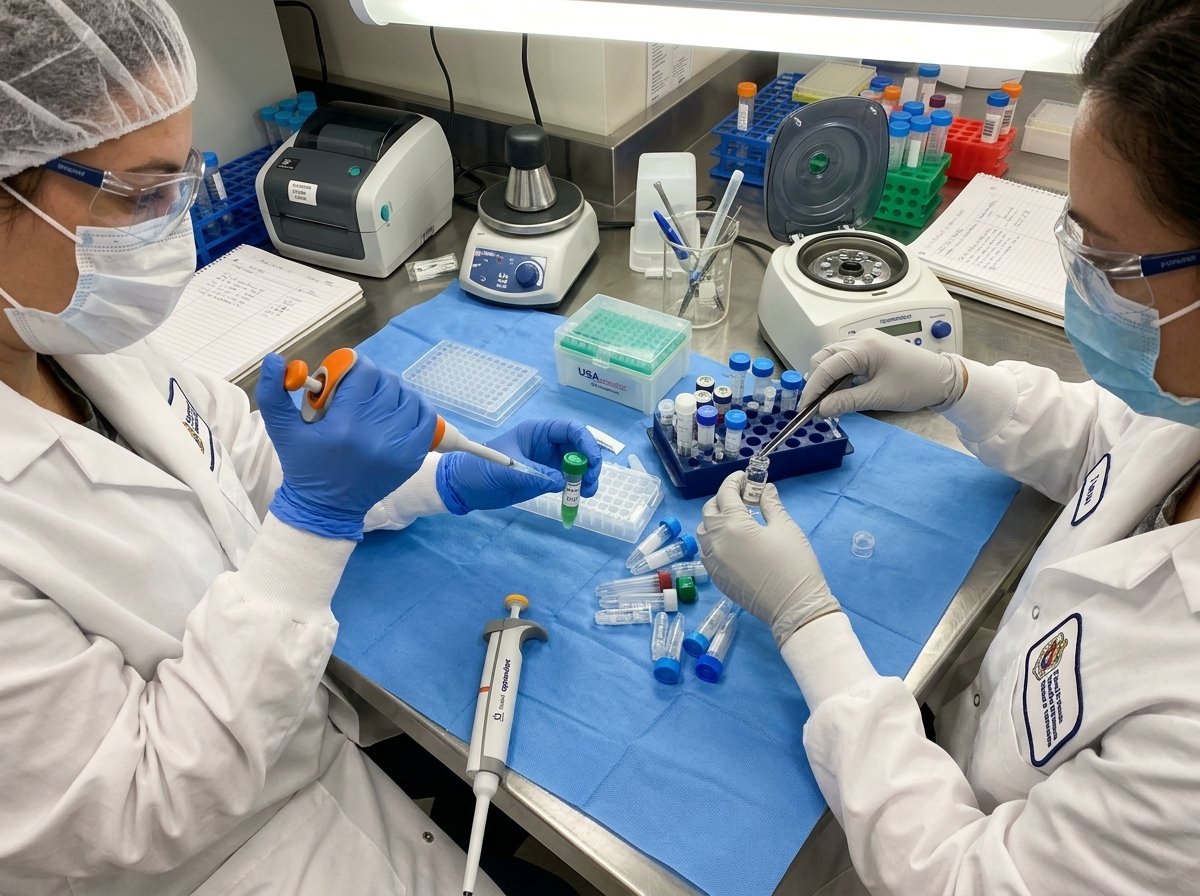
Understanding how research peptides are actually synthesized helps explain why purity percentages, counter-ion forms, and batch-specific documentation matter as much as they do. This article covers the basics of solid-phase peptide synthesis, the production method behind most research-grade peptides on the market today.
Solid-phase peptide synthesis (SPPS) overview
In solid-phase synthesis, amino acids are added one at a time to a growing chain that stays anchored to an insoluble resin support throughout the process. The chain is built from the C-terminus toward the N-terminus, with temporary protecting groups used to control exactly where each new amino acid attaches during each coupling step.
Why purity isn't automatic
Each coupling step in this process is not perfectly efficient. Incomplete reactions and side reactions generate truncated or modified sequences, sometimes called deletion or insertion peptides, which remain mixed in with the correct target sequence in the crude product. This is a normal and expected part of chemical synthesis, not a manufacturing defect, but it means further work is required before the material is research-ready.
Purification via preparative HPLC
After the finished chain is cleaved from its resin support, the crude peptide mixture undergoes preparative-scale HPLC purification, which separates the target sequence from the various synthesis byproducts generated during the coupling steps. This purification stage is what directly determines the final purity percentage that later appears on a Certificate of Analysis.
Lyophilization as the final step
Once purified, the product is typically freeze-dried into a stable powder form for storage and shipping. This lyophilization step is the same freeze-drying process covered in our guide to lyophilized versus liquid-form peptides, and it's chosen specifically because it preserves the purified compound's structure far better than simple evaporation.
Why this matters for research purchasing
Longer or more structurally complex sequences are inherently harder to synthesize at high purity, which helps explain price variance across different research compounds. Understanding this production chain also makes it easier to interpret purity specifications and batch documentation critically, rather than treating a purity percentage as an abstract marketing figure.